Does Skipping Breakfast Actually Tank Your Metabolism? Here's What the Research Shows
Quick Answer: Skipping breakfast does not meaningfully slow your metabolism in a way that causes fat gain — total daily calorie intake and activity level matter far more, and controlled studies comparing breakfast-skippers to breakfast-eaters with matched calories show no significant metabolic rate difference.
You’ve heard “eat breakfast or your metabolism slows down” so many times it feels like settled fact. It’s one of the more persistent nutrition myths, and the actual research tells a much less dramatic story.

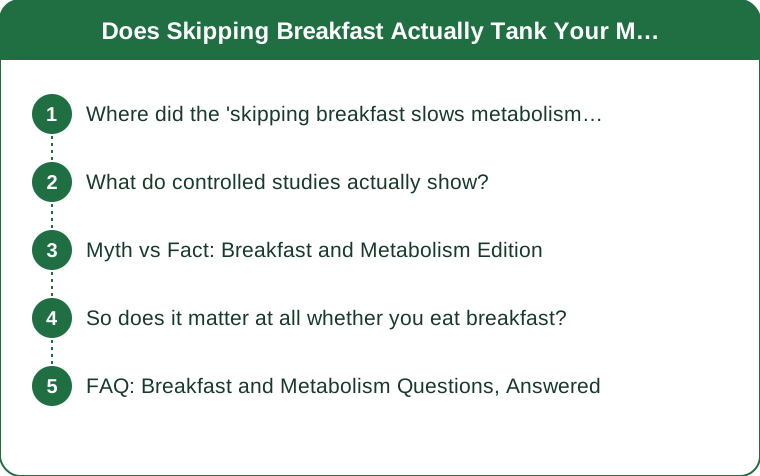
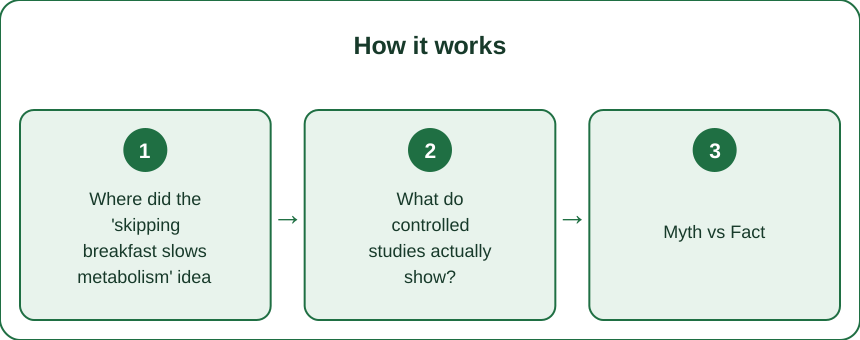
Where did the ‘skipping breakfast slows metabolism’ idea come from?
It likely originated from observational studies linking breakfast-skipping to higher obesity rates. But observational data shows correlation, not causation — people who skip breakfast in those studies often also had other differing habits (more late-night snacking, less overall diet structure) that better explain the association than metabolism itself.
What do controlled studies actually show?
When researchers directly compare breakfast-eaters to breakfast-skippers with total daily calories held constant, measured metabolic rate differences are minimal to nonexistent. Some intermittent fasting research, which necessarily involves skipping breakfast, shows comparable or even favorable metabolic markers compared to standard eating patterns — directly contradicting the idea that skipping breakfast inherently damages metabolism.

Myth vs Fact: Breakfast and Metabolism Edition
Myth: Not eating within an hour of waking puts your body into ‘starvation mode.’ Fact: True starvation-mode metabolic slowdown requires prolonged, severe calorie restriction over days, not a single skipped meal.
Myth: Eating breakfast is necessary for stable blood sugar all day. Fact: Blood sugar stability depends more on overall meal composition and timing than specifically on whether the first meal happens at 7am or noon.
Myth: Everyone responds to breakfast-skipping the same way. Fact: Some people genuinely feel better and perform better with breakfast due to personal preference, blood sugar sensitivity, or medication timing — individual response varies even though the ‘slowed metabolism’ claim itself doesn’t hold up broadly.
So does it matter at all whether you eat breakfast?
It matters for personal preference, energy levels, and whether skipping leads to overeating later — not for a fixed metabolic penalty. If skipping breakfast causes you to overeat by evening or feel poorly focused, that’s a real practical reason to eat it; it’s just not because your metabolism is broken without it.
FAQ: Breakfast and Metabolism Questions, Answered
Is intermittent fasting bad for metabolism?
Current research generally doesn’t support that claim — metabolic markers in most intermittent fasting studies remain stable or improve, provided total calorie and nutrient intake is adequate.
Does skipping breakfast cause muscle loss?
Not inherently — muscle preservation depends more on total protein intake and resistance training than on meal timing specifically.
Should athletes still eat breakfast?
Many athletes benefit from pre-training fuel for performance reasons, which is a separate consideration from the metabolism myth itself. This is general information, not medical advice.
TL;DR:
- Controlled studies show no meaningful metabolic rate difference between breakfast-eaters and skippers at matched calories
- The ‘slows metabolism’ claim traces back to correlational, not causal, data
- True metabolic slowdown requires severe, prolonged calorie restriction, not one skipped meal
- Eat breakfast if it helps you personally — not out of fear of a metabolism penalty that isn’t well supported
Breakfast can still be a good choice for plenty of personal reasons — just not the metabolic-emergency reason most people have been told.
Keep Reading
This article is for general informational purposes only and is not medical advice. Always consult a qualified health professional for guidance specific to you.