NEAT: The Thousand-Calorie Lever Hiding in Your Non-Exercise Day
The biggest calorie variable between similar people isn’t the gym — it’s NEAT, the non-exercise activity of ordinary days, which can differ by many hundreds of calories between the fidgety walker and the efficient sitter. The hidden-lever guide: the science, the audit and the redesign.

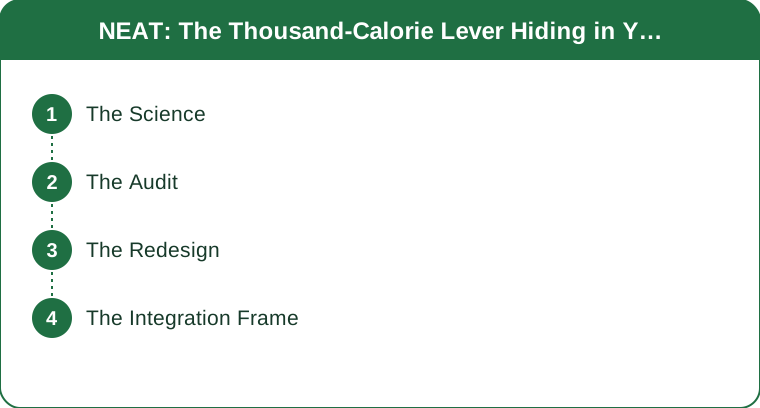
The Science
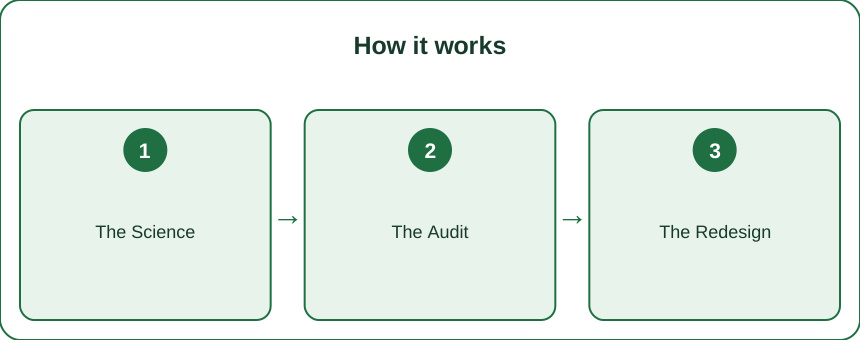
The burn nobody schedules: the NEAT definition (the non-exercise activity thermogenesis — the walking, standing, stairs, chores and fidgeting that aren’t workouts; the daily-life burn between basal rate and gym sessions), the variation headline (the between-person NEAT differences reaching many hundreds of daily calories in the research — the overfeeding studies where high-NEAT responders simply moved more without trying; the lean-versus-not variance living substantially here), the workout-comparison math (the daily NEAT often out-burning the gym hour — the 45-minute class versus fifteen waking hours of posture-and-motion; the metabolism-after-40 chapter’s NEAT collapse being the real midlife shift), the compensation trap (the workout day where NEAT quietly falls — the trained-this-morning couch afternoon that refunds the class; the wearable data that catches it), and the honest frame (NEAT as a weight-management lever, not a fitness replacement — the strength-and-cardio training still owning their jobs per the training doctrine).
The Audit
Finding your baseline: the step count as proxy (the week of honest tracking — the phone-or-watch average as the NEAT dashboard; the 3,000-step desk reality versus the 10,000 assumption), the sitting-hours count (the daily sit time totaled — the commute-desk-couch arithmetic that routinely tops ten hours per the sitting chapters), the movement-moment inventory (the stairs available and skipped, the walkable errands driven, the standing options unused — the environment’s declined offers listed), the weekend-weekday gap (the pattern audit that often finds one tier active and one sedentary — the two lives, one body problem), and the no-judgment rule (the audit as data, not indictment — the baseline that makes the redesign measurable; the tracking doctrine’s honest start).

The Redesign
Raising NEAT structurally: the commute-and-errand layer (the walk-or-park-far defaults, the walkable errands reclaimed — the transport minutes converted; the car left for the true cargo runs), the workday architecture (the standing calls, walking meetings, hourly movement snacks and the printer-on-another-floor tricks from the desk chapters — the office redesigned as a movement course), the home-chore reframe (the cleaning, gardening and cooking as legitimate NEAT — the chore hour burning like a walk; the outsourced-everything life quietly expensive metabolically), the leisure swap (the one evening screen-hour traded for the after-dinner walk from the glucose doctrine — the digestion-and-burn double), the fidget legitimacy (the pacing calls, the bouncing knee, the stand-and-stretch habit — the research vindicating the restless), and the friction principle (the environment changed ONCE beating daily willpower — the stairs-visible, shoes-by-door, standing-desk defaults from the environment doctrine; the NEAT raised by design, not discipline).
The Integration Frame
NEAT in the whole picture: the step-goal calibration (the personal baseline plus 2,000 as the first target — the gradual raise from the walking chapters; the 7,000-8,000 zone where the health curves flatten per the step-science), the training synergy (the NEAT floor making gym work land better — the active body that recovers and burns between sessions; the compensation trap watched on training days), the appetite note (the movement that regulates rather than spikes hunger — the walk that curbs what the couch craves), the aging relevance (the NEAT defense against the midlife drift from the after-40 chapter — the daily-life movement as the decade’s quiet lever), and the identity close (the high-NEAT life being pleasant, not effortful — the walks, stairs and errands that feel like living, not exercising; the thousand calories hidden in ordinariness, collected by design). Audit the steps, redesign the defaults, walk the errands: the lever, pulled daily.
NEAT — the walking, stairs, chores and fidgeting of ordinary days — varies by hundreds of calories between people and often out-burns the gym hour. Audit your steps, then redesign defaults: walkable errands, standing calls, stairs visible.
Keep Reading
This article is for general informational purposes only and is not medical advice. Always consult a qualified health professional for guidance specific to you.