Your Metabolism: The Myths, the Truths and the Levers That Matter
Metabolism is wellness culture’s favorite scapegoat and most misunderstood character: blamed for everything, ‘boosted’ by nothing sold in a bottle, and — per the best recent research — far more stable across adulthood than anyone believed. Here’s the honest owner’s manual.

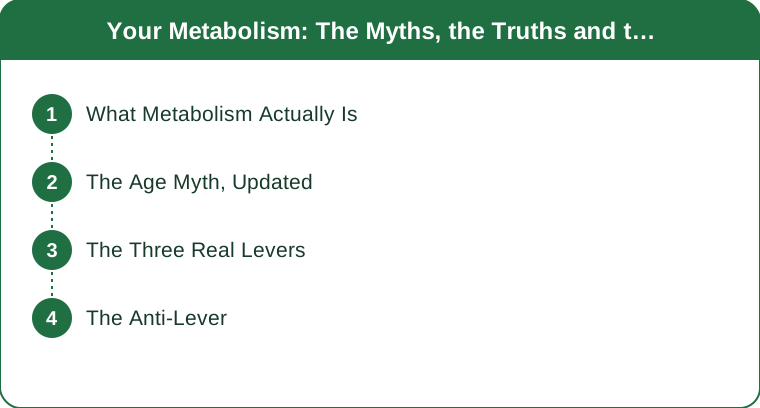
What Metabolism Actually Is
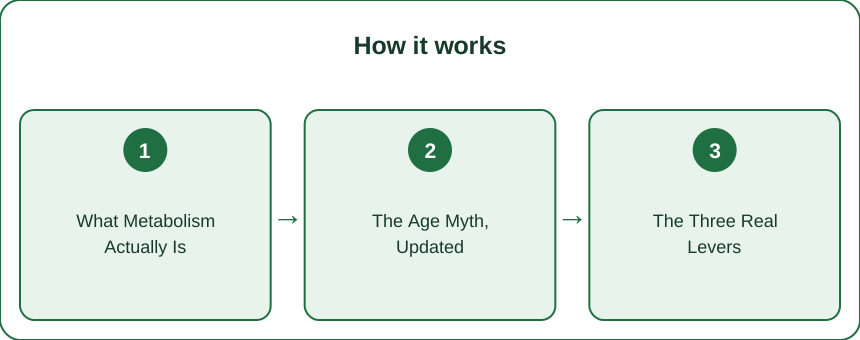
The accounting: your total burn is mostly resting metabolism (the cost of being alive — organs are expensive tenants), plus digestion, plus exercise, plus the sleeper category NEAT (non-exercise activity — fidgeting, walking, standing) which varies hugely between people and explains more ‘fast metabolism’ mythology than genetics does. The friend who ‘eats anything’ usually also moves constantly; the metabolism was never magic, it was motion.
The Age Myth, Updated
The research plot twist: landmark large-scale data found metabolism essentially STABLE from the twenties to about sixty (adjusted for body composition) — the ‘metabolism dies at 30’ story doesn’t hold. What actually changes in midlife: muscle mass drifts down, activity drifts down, sleep and stress shift — all of which LOOK like metabolic slowdown and all of which are addressable. The scapegoat was innocent; the levers were unattended.

The Three Real Levers
What genuinely moves the needle: muscle (the metabolically active tissue — strength training is the closest thing to a legitimate ‘metabolism boost’ on the market), protein (highest digestion cost of any macronutrient, plus it protects muscle — the practical double-win), and NEAT (the daily-movement layer: walking, stairs, standing — unglamorous, uncapped, and bigger than most gym sessions). Everything sold as a ‘booster’ — the teas, the pills, the hacks — rounds to zero against these three.
The Anti-Lever
The self-sabotage to skip: aggressive crash dieting, which teaches the body to run leaner on less (adaptive slowdown is real) and burns muscle along the way — the exact opposite of the goal. The sustainable playbook: modest deficits when needed, protein and strength training always, sleep guarded (short sleep measurably disrupts hunger hormones), and patience with a system that responds to seasons, not weekends. Your metabolism was never broken — it was waiting for the levers.
Muscle, protein, NEAT — and never crash. The metabolism was framed all along; the real story is boring, trainable and entirely in your hands.
Keep Reading
This article is for general informational purposes only and is not medical advice. Always consult a qualified health professional for guidance specific to you.