Why Weight Loss Stalls Even When Nothing Else Has Changed
A weight loss plateau that shows up despite genuinely consistent diet and exercise habits isn’t usually a sign of secretly cheating, it’s a predictable physiological response called metabolic adaptation, and understanding it changes how the plateau should actually be handled.

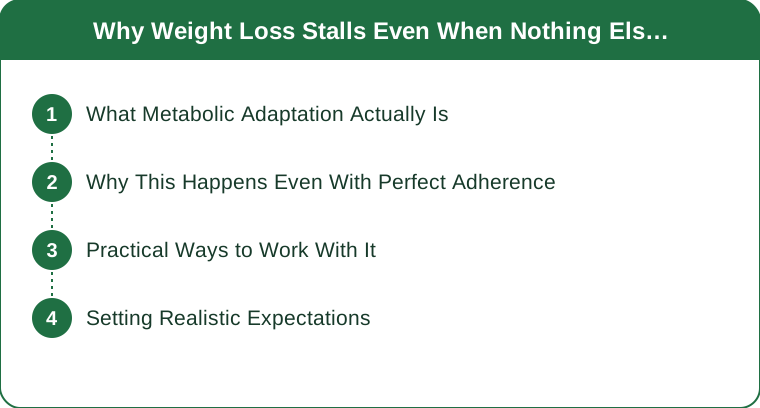
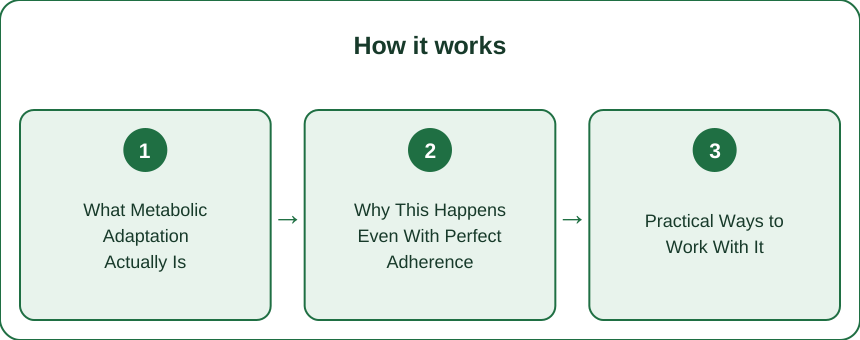
What Metabolic Adaptation Actually Is
The mechanism: the the-energy-expenditure-downshift (the body reducing total daily energy expenditure below what would be predicted from body weight and activity alone, a genuine adaptive response to sustained calorie deficit), the the-non-exercise-activity-reduction (a significant portion of this downshift coming from unconscious reductions in non-exercise movement, like fidgeting or overall daily activity, rather than deliberate behavior change), the the-hormonal-signaling-shift (hormones involved in hunger and energy regulation shifting during sustained deficit in ways that both increase hunger and reduce the drive to move, compounding the expenditure drop)).
Why This Happens Even With Perfect Adherence
The unavoidable biology: the the-evolutionary-survival-mechanism (metabolic adaptation representing an evolved survival response to perceived food scarcity, meaning it activates regardless of how intentional or health-motivated the calorie deficit is), the the-magnitude-scales-with-deficit-size (the size of the adaptation generally scaling with the size and duration of the calorie deficit, meaning more aggressive or prolonged diets tend to produce a larger adaptive response), the the-not-a-sign-of-failure (a plateau caused by metabolic adaptation reflecting expected physiology rather than any error in the approach being taken).

Practical Ways to Work With It
The response strategies: the the-diet-break-consideration (a planned, temporary return to maintenance-level eating for one to two weeks giving the body a chance to partially reverse some of the adaptive downshift before resuming a deficit), the the-recalculating-needs-periodically (recalculating actual calorie needs periodically rather than assuming the original deficit calculation still applies after significant weight loss, since a lighter body genuinely needs less energy independent of adaptation), the the-strength-training-priority (prioritizing resistance training during weight loss to help preserve muscle mass, which supports a higher metabolic rate than fat loss alone would leave behind).
Setting Realistic Expectations
The mindset: the the-adaptation-partially-reverses-not-permanent (metabolic adaptation partially reversing once a deficit ends or eases, meaning the slowdown isn’t a permanent, fixed change to metabolism), the the-patience-over-panic-response (responding to a plateau with a measured adjustment, like a diet break or recalculation, tends to work better long-term than a panicked, more extreme calorie cut), and the frame (metabolic adaptation is a real, expected physiological response to sustained calorie deficit, not a personal failure — a temporary diet break, periodic recalculation, and resistance training are more effective responses than assuming something has been done wrong.)
A weight loss plateau that shows up despite genuinely unchanged habits is usually metabolic adaptation at work, a real reduction in total daily energy expenditure below what body weight and activity alone would predict, driven partly by unconscious drops in non-exercise movement and partly by hormonal shifts that simultaneously increase hunger and reduce the drive to move. This is an evolved survival response to perceived food scarcity that activates regardless of how intentional or health-motivated the deficit is, and it tends to scale with how large or prolonged that deficit has been, meaning it reflects expected physiology rather than any error in approach. A planned diet break of a week or two back at maintenance calories, recalculating actual energy needs periodically as body weight drops, and prioritizing resistance training to help preserve muscle mass are all more effective responses than an even more aggressive calorie cut. The adaptation partially reverses once the deficit eases, which is the most useful thing to remember when a plateau hits: it’s a temporary, adaptive slowdown, not a permanent break in how the body works.
Keep Reading
This article is for general informational purposes only and is not medical advice. Always consult a qualified health professional for guidance specific to you.