Does Eating More Protein Actually Boost Metabolism, or Is That Overstated?
Quick Answer: Protein does have a real, measurable metabolic effect through its higher thermic effect of food compared to fat and carbohydrates, meaning more energy is spent digesting it. The effect is real but modest, typically adding a small percentage to daily calorie burn, not a dramatic metabolism transformation.
Protein’s metabolism-boosting reputation is grounded in real science, but the actual magnitude of the effect is smaller than a lot of marketing suggests.

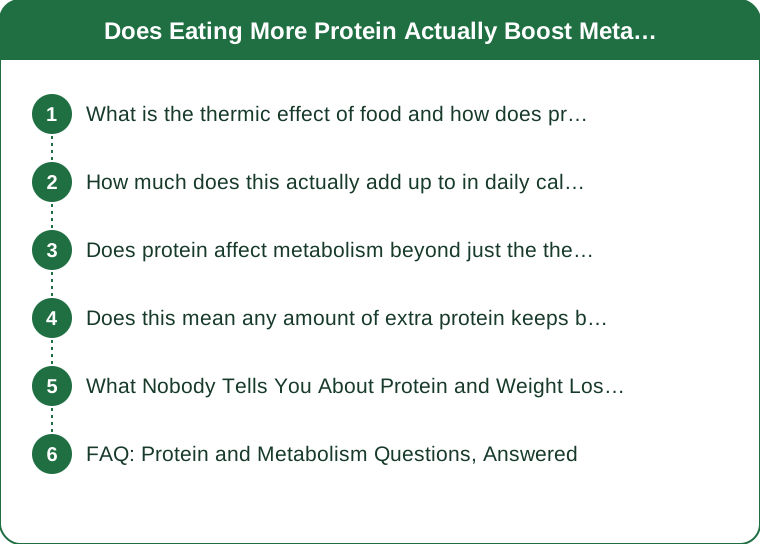
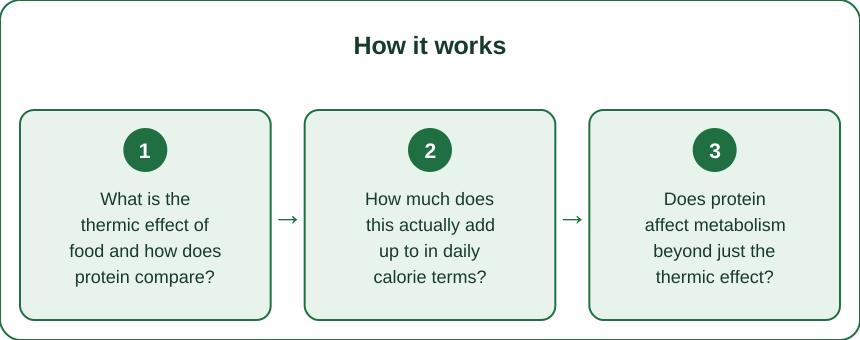
What is the thermic effect of food and how does protein compare?
The thermic effect of food refers to the energy the body spends digesting, absorbing, and processing what you eat. Protein has a notably higher thermic effect, around 20-30% of its calories, compared to roughly 5-10% for carbohydrates and 0-3% for fat, meaning a higher-protein meal does genuinely burn more calories in digestion alone.
How much does this actually add up to in daily calorie terms?
For most people, the additional calorie burn from higher protein intake amounts to a modest increase, often in the range of 80-100 extra calories burned per day at meaningfully elevated protein intake, a real but far from dramatic contribution to total daily energy expenditure.
Does protein affect metabolism beyond just the thermic effect?
Yes — protein also supports maintaining lean muscle mass, especially during weight loss or strength training, and since muscle tissue burns more calories at rest than fat tissue, preserving muscle indirectly supports resting metabolic rate over time.

Does this mean any amount of extra protein keeps boosting metabolism further?
No — the thermic effect benefit follows a fairly consistent proportional relationship to protein intake within a normal healthy range, so dramatically exceeding typical recommended protein intake does not produce a proportionally larger metabolic benefit.
What Nobody Tells You About Protein and Weight Loss Claims
Protein’s real metabolic and appetite-regulating benefits get frequently exaggerated into claims that it dramatically speeds up metabolism, when the more accurate and still genuinely useful picture is a modest thermic effect combined with better appetite control and muscle preservation.
FAQ: Protein and Metabolism Questions, Answered
How much protein is generally recommended to get this benefit?
Many guidelines suggest roughly 0.7-1 gram of protein per pound of body weight for active individuals, though needs vary based on goals and activity level.
Does protein timing throughout the day matter for this effect?
Spreading protein intake across meals rather than concentrating it in one meal appears to support both the thermic effect and muscle protein synthesis somewhat more effectively.
Is the metabolism effect the main reason protein helps with weight management?
Appetite regulation and satiety from protein likely play an equally or more significant practical role in weight management than the thermic effect alone.
TL;DR:
- Protein has a real, measurably higher thermic effect than fat or carbohydrates
- The actual daily calorie contribution is modest, not a dramatic metabolism transformation
- Muscle preservation from adequate protein indirectly supports resting metabolic rate
- Appetite regulation from protein is likely just as practically important as the metabolic effect
Protein’s metabolism-boosting reputation is grounded in real evidence, just smaller in actual magnitude than much of the marketing around it suggests.
Keep Reading
This article is for general informational purposes only and is not medical advice. Always consult a qualified health professional for guidance specific to you.