Does Caffeine Actually Boost Your Metabolism, or Just Feel Like It Does?
Quick Answer: Caffeine does produce a small, measurable increase in metabolic rate — typically 3-11% for a few hours after consumption — but the effect is modest and temporary, nowhere near large enough to drive meaningful weight change on its own.

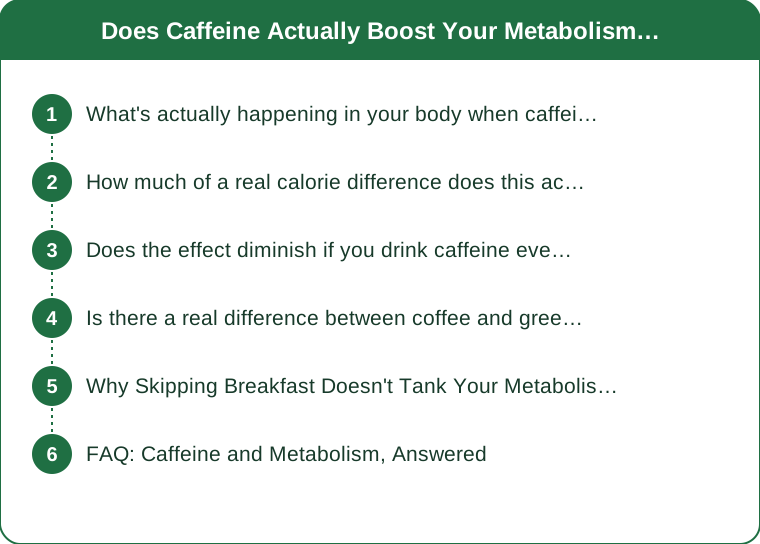
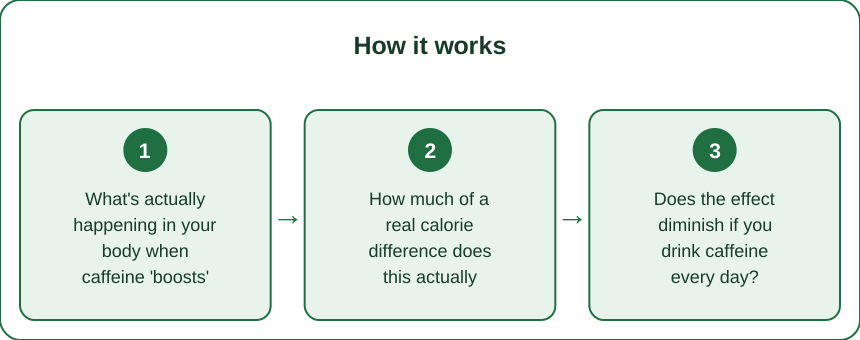
What’s actually happening in your body when caffeine ‘boosts’ metabolism?
Caffeine stimulates the central nervous system and increases the release of adrenaline, which raises heart rate and encourages fat cells to release stored fat as fuel. This is a real, measurable thermogenic effect — it’s just smaller in practice than supplement marketing implies.
How much of a real calorie difference does this actually make?
For most people, caffeine’s metabolic boost amounts to roughly 20-50 extra calories burned over a few hours after a normal dose (around 200mg, or about two cups of coffee) — a small fraction of daily energy expenditure that’s easily offset by the cream and sugar many people add to their coffee.
Does the effect diminish if you drink caffeine every day?
Yes, meaningfully — regular caffeine users develop tolerance to its metabolic and stimulant effects within one to two weeks of consistent daily intake. This is why occasional or strategic caffeine timing (like before a workout) tends to produce a more noticeable effect than habitual all-day drinking.

Is there a real difference between coffee and green tea for this effect?
Green tea contains both caffeine and catechins (particularly EGCG), and some research suggests the combination produces a slightly larger thermogenic effect than caffeine alone, though the difference is modest rather than dramatic. Neither is a substitute for the larger levers of diet and activity.
Why Skipping Breakfast Doesn’t Tank Your Metabolism the Way People Think
A related myth in the same family: people assume any small metabolic disruption — skipping a meal, drinking decaf, timing coffee ‘wrong’ — meaningfully slows fat loss. In reality, total daily energy balance overwhelms these small individual metabolic effects, caffeine’s boost included. It’s a real but minor factor, not a lever worth obsessing over.
FAQ: Caffeine and Metabolism, Answered
Does decaf coffee have any metabolic effect at all?
Decaf has negligible caffeine and essentially no measurable thermogenic effect, though it retains some antioxidant compounds present in coffee generally.
Is it worth timing caffeine specifically around workouts for a metabolic benefit?
Yes, somewhat — caffeine taken 30-45 minutes before exercise can modestly increase calories burned during the session itself, on top of its baseline effect.
Can too much caffeine ever backfire for metabolism or weight goals?
Indirectly, yes — excess caffeine disrupting sleep is far more likely to hurt metabolic health and appetite regulation than any lost thermogenic benefit from cutting back.
TL;DR:
- Caffeine raises metabolic rate modestly, roughly 3-11% for a few hours
- The real-world calorie effect is small, around 20-50 extra calories
- Daily use builds tolerance, dulling the effect within one to two weeks
- Total energy balance matters far more than any single metabolic booster
Caffeine’s metabolism boost is real but small — useful as a minor edge, not a strategy to build weight loss expectations around.
Keep Reading
This article is for general informational purposes only and is not medical advice. Always consult a qualified health professional for guidance specific to you.